

How Do I Know If My Dog Is Really A Registered Service Dog
If y'all were asked what comes to listen when envisaging a "service dog," what would you lot see? To many, a service dog is a Labrador leading the blind, a goldendoodle pulling a wheelchair, a retriever picking upwardly a pair of housekeys and placing them in the hands of their mobility impaired handler. A service domestic dog is an incredibly valuable tool for an private living with disabilities which make it difficult to accomplish certain tasks on their ain. A properly trained service dog tin work wonders for a family by relieving some of the pressures which parents of a disabled child face daily, while allowing their children to begin experiencing independence which they would exist unable to without their service dog.

Just My Domestic dog Provides Emotional Support!
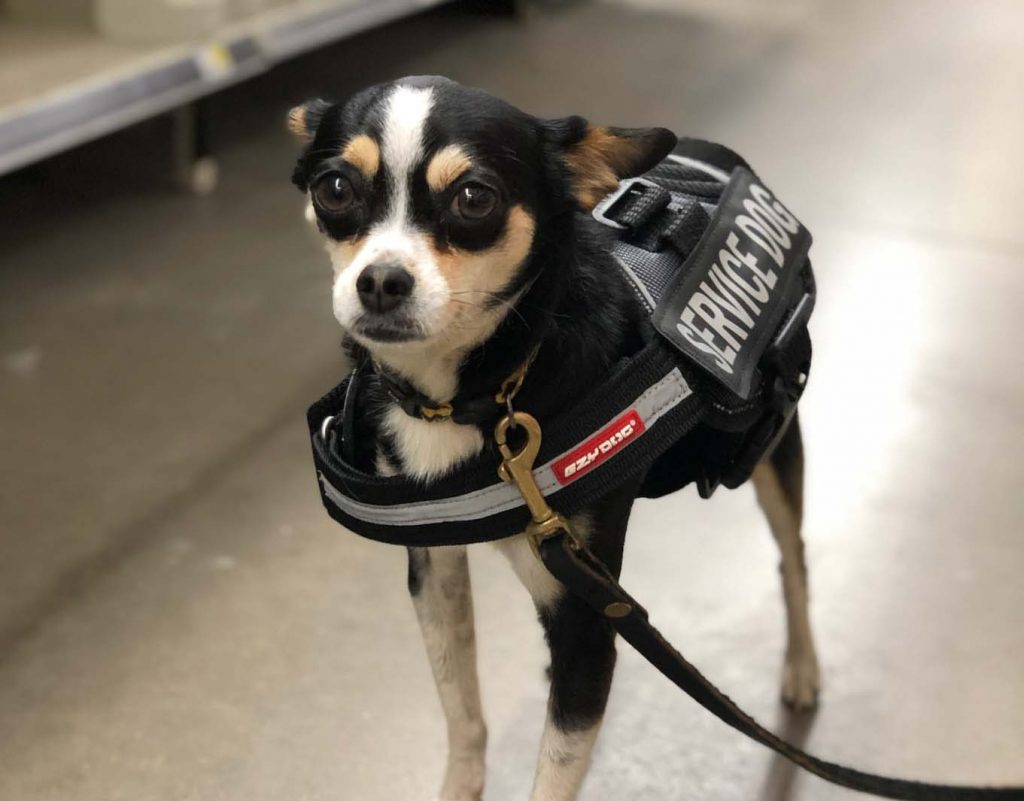
Emotional support animals – typically dogs – are pets who may help to calm individuals with anxiety or cheer those experiencing depression. Typically, a pet tin be registered equally an ESA with the assistance of a psychologist or psychiatrist (who provides written verification that this pet does indeed improve 1's mental country), only ESAs are not trained to perform specific tasks for their handler. Therapy dogs provide comfort to large groups of people and typically require the verification of each individual facility they are working in (such as hospitals, schools or nursing homes) prior to inbound.
Neither ESAs or therapy dogs are service dogs. Service dogs are trained to help one, specific person with very particular tasks. The reason why service dogs are immune entry into many places where ESAs, therapy dogs and pet dogs are not is because their handlers genuinely require them simply to part properly. Separating a handicapped private from their service dog will likely result in a significant increase in the difficulty of tasks for that person, in improver to beingness downright dangerous in certain instances.
Most people can appreciate the universal psychological and concrete benefits that owning a dog tin offer, but service dogs provide much more than. Non every canis familiaris has the mental capacity or temperament necessary to get a service dog, then service dogs are thoroughly tested and specifically selected for their work. Unfortunately, even the best candidates can "launder out" of their program for a number of reasons, leaving only the dogs who consistently perform exactly as required in a broad variety of settings.
Although a pet canis familiaris may possess a strong attachment to its owner, many disabled individuals must reach a divide service domestic dog specifically selected and trained to aid them. We typically practice not train pet dogs to be service dogs for a number of reasons, some of which include:
• The dog is too reactive
• The dog is non socialized well enough
• The dog displays symptoms of potential behavioral issues which could be dangerous or confusing in public
• The dog is not focused enough
• The domestic dog is not calm enough
• The dog is not receptive enough to training methods
• The dog is non driven or motivated plenty to perform the tasks necessary
• The dog is likewise easily frightened
• The dog is not consistent
• The domestic dog is too social (to the point where it would be difficult to train the focus necessary for work)
A service dog is a tool, non an accessory.
How Do I Place a "Simulated" Service Dog?
At this betoken you are probably wondering, "Okay – I know what a service dog is, now what is it non?" The topic of "fake" service dogs is something which is becoming increasingly more oft discussed and controversial throughout our lodge. Some states are fifty-fifty passing legislature punishing individuals who dishonestly bring their pet in a "no pet" zone by falsely claiming that that their pet is a service dog. The legal consequences currently include everything from fines to criminal charges, and are becoming more serious as the issue occurs more than often.
How does someone get abroad with ordering a service dog belong and modeling it on their pet in the middle of Walmart on a Saturday afternoon? The ADA does non require service dogs to be certified past any licensing agency or registry. Forcing disabled individuals to license their service canis familiaris would technically be discrimination and could brand it significantly more difficult for people who genuinely demand service dogs to go them.
The ADA also does non crave service dogs to be trained by a professional organization as the cost of a professionally trained service dog tin can be substantial, and unaffordable for those who do not have access to this kind of funding. Service dogs can consequently be trained directly by their handler; however, they must withal abide by social etiquette standards. Whatever facility is legally immune to remove a service dog if it:
• Becomes unruly and distracting to other patrons.
• Poses a threat to others through the demonstration of ambitious behaviors.
• Becomes destructive to property.
• For any reason fails to be under the control of or supervised by its handler.
Generally, it will be easy to recognize a "real" service dog by their focused, disciplined, non-reactive beliefs. Service dogs should non be easily distracted, dragging their handler against their will or leaving their handler to visit anybody they laissez passer. They too should not react aggressively to other dogs or people and should be clearly focused on doing their work. Most pet dogs, unless impeccably trained, volition not be a shining instance of these behaviors.
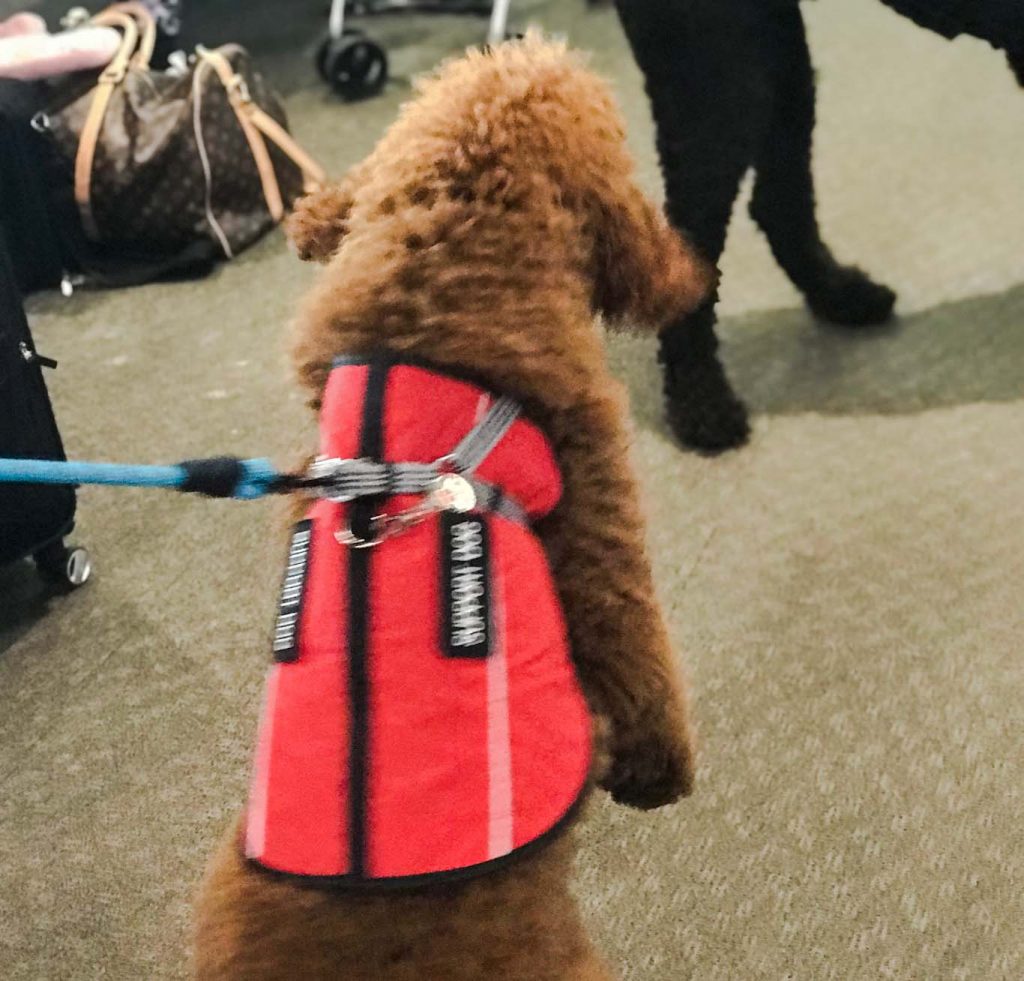
The increasing demand for service dogs, alongside the recent 'trend' of individuals wanting a service canis familiaris of their own has resulted in the unfortunate development of scam service canis familiaris companies. These companies will usually attain a plethora of easily acquirable dogs, usually without temperament testing them or setting any standards for their dogs, and sell them for thousands to individuals who really demand a service dog. If clients are lucky, their "service domestic dog" may have some basic obedience training, and hopefully volition take been socialized in more environments than the kennel they are coming from.
Can you spot one from the other?
Service dogs are 1 of the almost valuable tools that many disabled individuals can possess. They provide aid, independence and comfort while enabling their handlers to achieve things they may never have done otherwise. The abuse of service canis familiaris privileges past those who but want to take their pet with them on their forenoon shop is causing people to react negatively to genuine service dogs. Unfortunately, this is making it significantly more difficult for disabled people to navigate the earth with their service dog due to the interrogation and disrespect many handlers experience while in public.
Our service dog training program is working to battle the challenges that modern day service dog handlers face through unmatched quality training programs, educational courses and community offerings. It is non hard to differentiate betwixt a real service dog and a "fake" service dog once you understand what exactly a service dog is. Watching these dogs work should be an incredible and inspirational feel, not one that makes y'all desire to flee in the other direction.

Source: https://highlandcanine.com/how-to-identify-a-fake-service-dog/
Posted by: stewartproughat.blogspot.com
0 Response to "How Do I Know If My Dog Is Really A Registered Service Dog"
Post a Comment